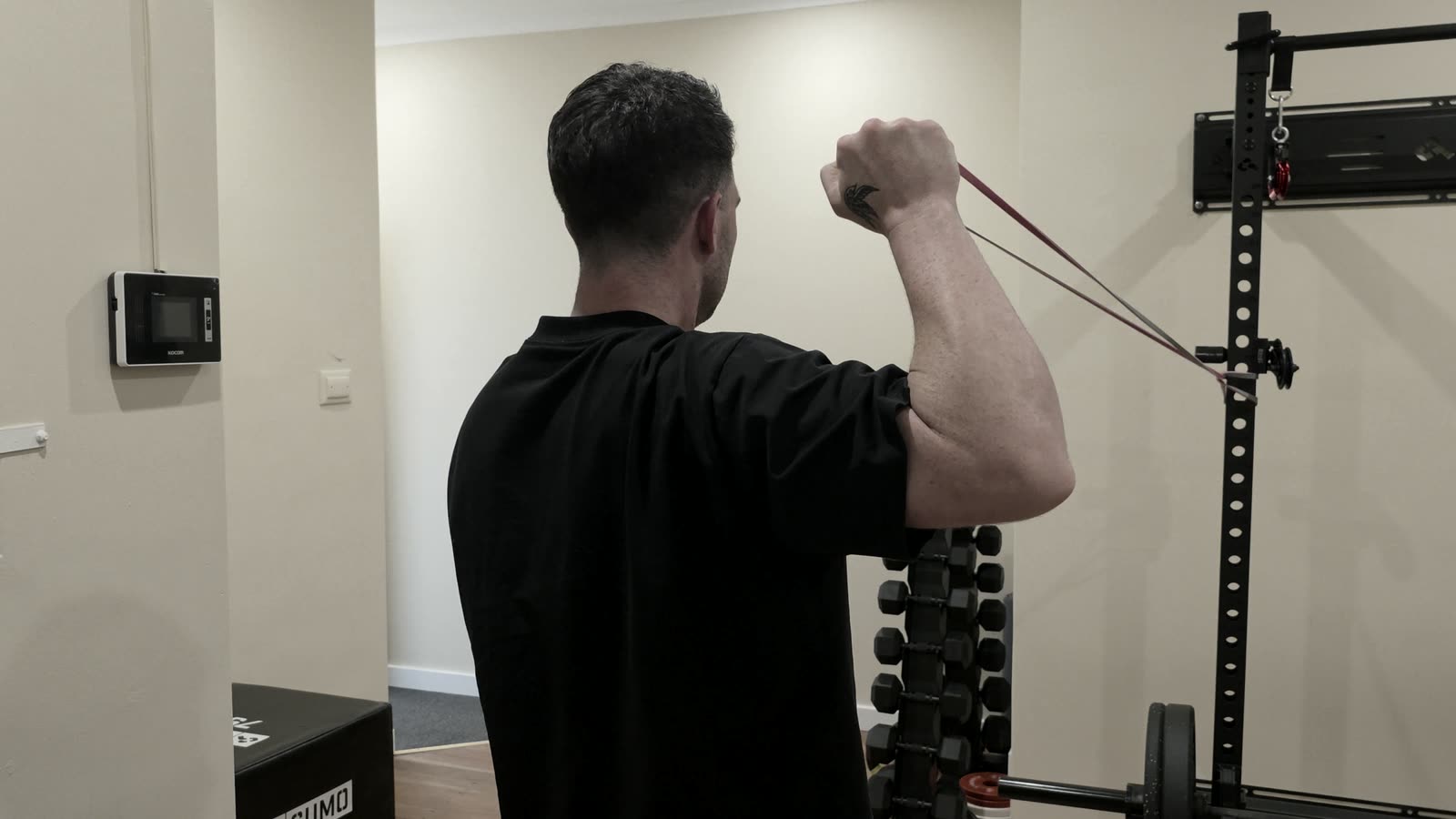
Where neck and shoulder pain comes from
Most of it traces back to load: hours at a desk, driving, looking down at a phone, or a training block that jumped faster than the tissue could adapt. Old injuries add to it, because they leave you moving a little differently and something nearby picks up the extra work.
The neck and shoulder share muscles and nerves. A stiff neck can make the shoulder sore, and a shoulder that doesn’t move well can overload the neck, so I assess them together.
What it tends to look like
Neck pain with headaches. Neck stiffness with a headache that starts at the base of the skull is often a neck problem, not a head problem.
An ache across the top of the shoulders after a day at a desk. Usually capacity, not posture. I have written about desk worker shoulder pain and the tech neck myth.
Pain lifting your arm, or weakness overhead. Often the rotator cuff, which is more commonly loaded poorly than torn. See rotator cuff tears: surgery or rehab.
A shoulder that has gradually stiffened, with night pain. Especially from your 40s to your 60s, this can be frozen shoulder, which needs a different approach.
What I do
I assess the neck, upper back and shoulder together to find what is being overloaded. I settle the pain with the right movement, and hands-on work where it helps. Then I rebuild strength where it is needed: the deep neck muscles, the upper back and the rotator cuff, through the range you actually use. Stretching helps for an hour. Strength is what changes the pattern.
When to get it checked urgently
Neck or shoulder pain after significant trauma, arm weakness or numbness that is spreading, a sudden severe headache, or neck stiffness with a fever all need prompt medical assessment. Call 000 for sudden weakness on one side, difficulty speaking, a drooping face or sudden loss of vision.